Meadow Care

Meadow Care Checklist: Monthly Tasks for a Thriving Wildflower Patch
A meadow is not a lawn that got away from you. It is a working patch of ground with its own calendar, and the jobs that matter come round at a particular time each year. Get the timing right — especially the cut — and flowers hold their ground against the grasses. Get it wrong for two or three seasons and the grasses quietly win. Keep this checklist in the shed or on the kitchen noticeboard and work through it as the year turns.
Late Winter: Plan, Sharpen, and Look Closely (January–February)
Very little happens above ground, which makes this the best month for thinking rather than doing. Walk the meadow on a dry day, when the soil is not squelching underfoot, and read it like a map: where did the knapweed do well, where did the grass crowd everything out, which corner stayed wet until May?
- Order native seed and plug plants now. Specialist suppliers sell out long before spring.
- Service the mower and strimmer, sharpen the blades and fit a new cord.
- Note bare patches worth scarifying in spring and any bramble or bracken creeping in from the edges.
- Clear fallen branches and snapped stems, but leave standing seed heads for the birds as long as you can bear it.
- Sketch a rough plan: which areas get cut, which stay long, where you would like yellow rattle to spread.
Stay off saturated ground. Compaction in February takes years to undo.
Early Spring: The Cut-Back (March)
Once the worst of the frost has passed and you can see the first fresh growth at the base of the plants, cut last year's standing material down to about 5–7cm. A strimmer, scythe or mower on its highest setting will all do the job. Then rake off everything you have cut.
This is the point where many people go wrong. Leaving the cut material lying on the ground feeds the soil, and rich soil grows grass, not wildflowers. Cart it onto the compost heap. Afterwards, scarify any bare or thatchy patches with a stiff rake to open the surface, and leave a few tussocks and hollow stems standing at the edges for overwintering insects.
Mid-Spring: Rattle, Plugs, and Restraint (April–May)
Yellow rattle is the meadow gardener's best ally: it weakens the grasses that would otherwise swamp everything else. Autumn sowing gives the best results, but a spring sowing can work if you keep the grass around it short and water it through dry spells. Rake the patch bare, scatter the seed thinly, press it into the soil with the flat of a rake or your boot, and resist the urge to cover it deeply.
Plant plug plants into short grass in April and May, water them in, and keep watering through any dry fortnight in their first season. Do not mulch, and do not feed. Pull docks, thistles and ragwort by hand while the soil is soft and before they set seed — wear gloves for the ragwort, and pull it roots and all.
Summer: Edges, Water, and a Notebook (June–August)
The main meadow is left alone now. Everything you do this month is about keeping the patch looking intentional rather than abandoned.
Mow the frame, not the picture
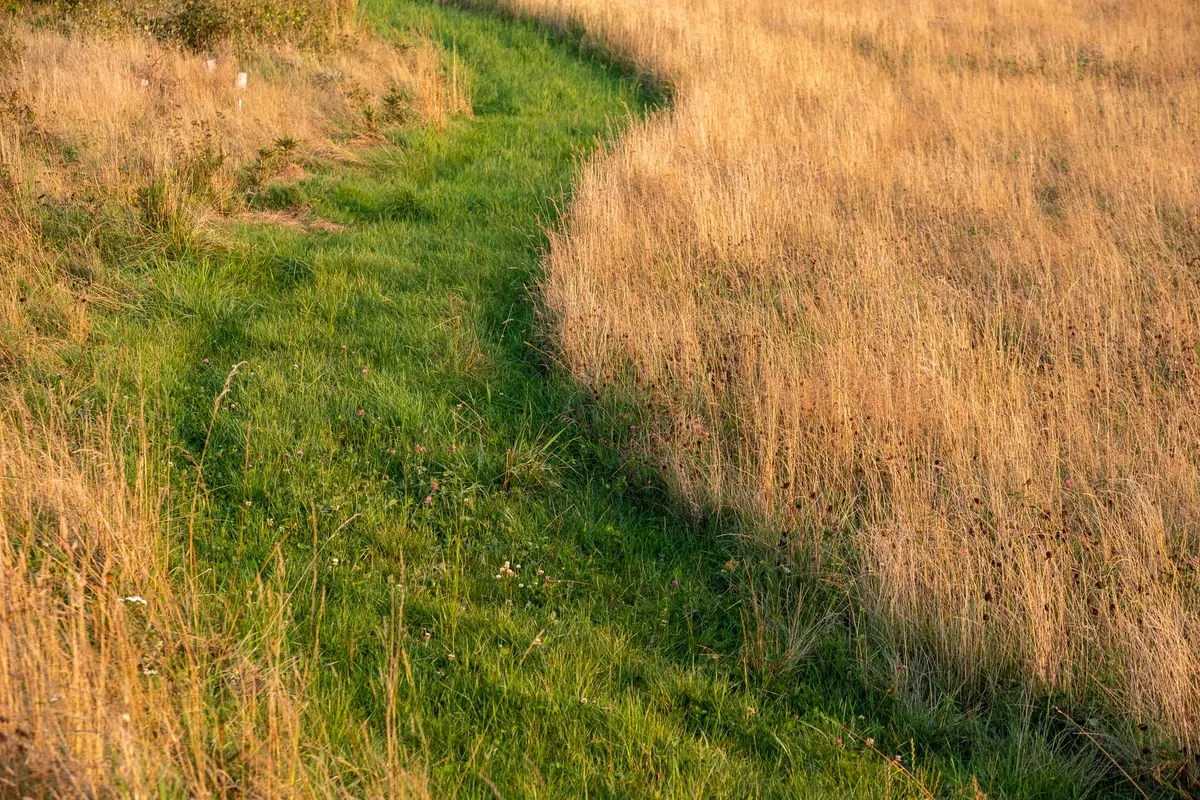
Cut paths and margins every fortnight to around 5cm. Crisp edges do more for a wildflower patch than any amount of weeding; they tell the eye that the shaggy middle is a decision, not neglect. If one grass species starts to dominate a patch, cut that area and remove the clippings rather than the whole meadow.
Water only what is new
Established meadow plants should be left to find their own water. Save the watering can for plugs planted this year, and give them a proper soak rather than a daily sprinkle.
Keep a few notes and photographs as flowers come and go. A year from now you will be glad of a record of what bloomed when, and where the gaps were.
Early Autumn: The Hay Cut (September)
This is the single most important job of the year. If you want to collect your own seed, wait until it is ripe — the seed heads rattle when you shake them, and seed falls readily into your hand. Otherwise, cut from late July onwards, depending on your region and how the season has run.
- Pick a settled dry spell, with two or three rain-free days ahead.
- Cut the whole meadow to 5–7cm.
- Leave the cut material lying for two or three days so any remaining seed drops back onto the soil.
- Rake it all off and compost it. Removing the cuttings is what keeps fertility low and flowers abundant.
- Rake once more to open up the sward, then stop for a fortnight and see what regrows.
If growth comes back strongly, take a second cut later in the autumn, down to about 7–10cm, and clear that too.
Late Autumn and Early Winter: Sow, Scatter, Stop (October–December)
Autumn is the natural sowing season. Yellow rattle seed needs cold to germinate, so sow it between September and November, and sow wildflower seed while the soil is still warm enough to let roots settle before winter. Collect seed from your own meadow on dry days, label the envelopes, and store them somewhere cool and dark until you are ready.
Then do nothing. Leave the seed heads standing through winter, let the tussocks stay, and let the ground rest. December is for ordering next year's plugs and rereading your summer notes with a cup of tea.
Making the Checklist Work for You
Dates shift with region and weather. A heavy clay meadow in the north runs a fortnight or more behind a sandy patch in the south, so treat the months as prompts rather than rules. If you only manage three things all year, make them these:
- Cut and clear the meadow at least once, and remove every last clipping.
- Never add fertiliser, rich compost or mulch to a wildflower area.
- Keep the edges mown so the meadow reads as a garden feature.
Miss a job and nothing disastrous happens — meadows are forgiving, and a season of neglect usually means a little more grass and a little less flower, not ruin. Tick off what you can, keep the notes coming, and let the patch tell you what it needs next.
Photo: garten-gg / Pixabay
Related Articles