Meadow Care
Meadow Gardening for Beginners: Your First Year Explained
Meadow Gardening for Beginners: Your First Year Explained
A meadow is not a lawn left to grow. It is a managed patch, cut at the right times and left alone at others. In the first year it often looks scruffy, patchy and nothing like the seed packet. That is normal. Here is what to expect and do, month by month.
January to February: plan, observe, and hold back
Before you sow or cut, watch the patch. Where does the sun fall? Where does water sit after rain? Most wildflower meadows want an open, sunny spot and soil that is not too rich. If your patch is a fed lawn, stop feeding it and stop using weed-and-feed. Fertility encourages grass at the expense of flowers.
Decide which route suits you:
- Perennial meadow: sow in autumn if you can, or convert an existing lawn slowly by mowing and removing clippings.
- Annual cornfield meadow: sow in spring on bare soil for quick colour while perennials establish.
- Yellow rattle patch: sow this parasitic wildflower in autumn; it weakens grass and helps flowers compete.
Order seed suited to your soil and region, and store it cool and dry. Avoid digging fertile soil unless you must; cultivation releases nutrients and wakes weed seeds.
March to April: prepare, sow, or start mowing
If you are sowing an annual mix, prepare a clean seedbed now. Remove weeds, rake to a fine tilth, and firm the surface. Mix seed with sand or dry soil so it spreads evenly. Broadcast by hand, then tread or roll. Water if the weather turns dry.
For a perennial meadow, spring sowing is a gamble in dry spells. If you sow now, keep the surface moist until seedlings are established, and do not bury the seed deeply. If you are converting a lawn, start cutting at 5–7cm every three weeks or so, removing the clippings each time. This weakens coarse grass, lets light reach the soil, and stops the patch from becoming a thick mat of grass.
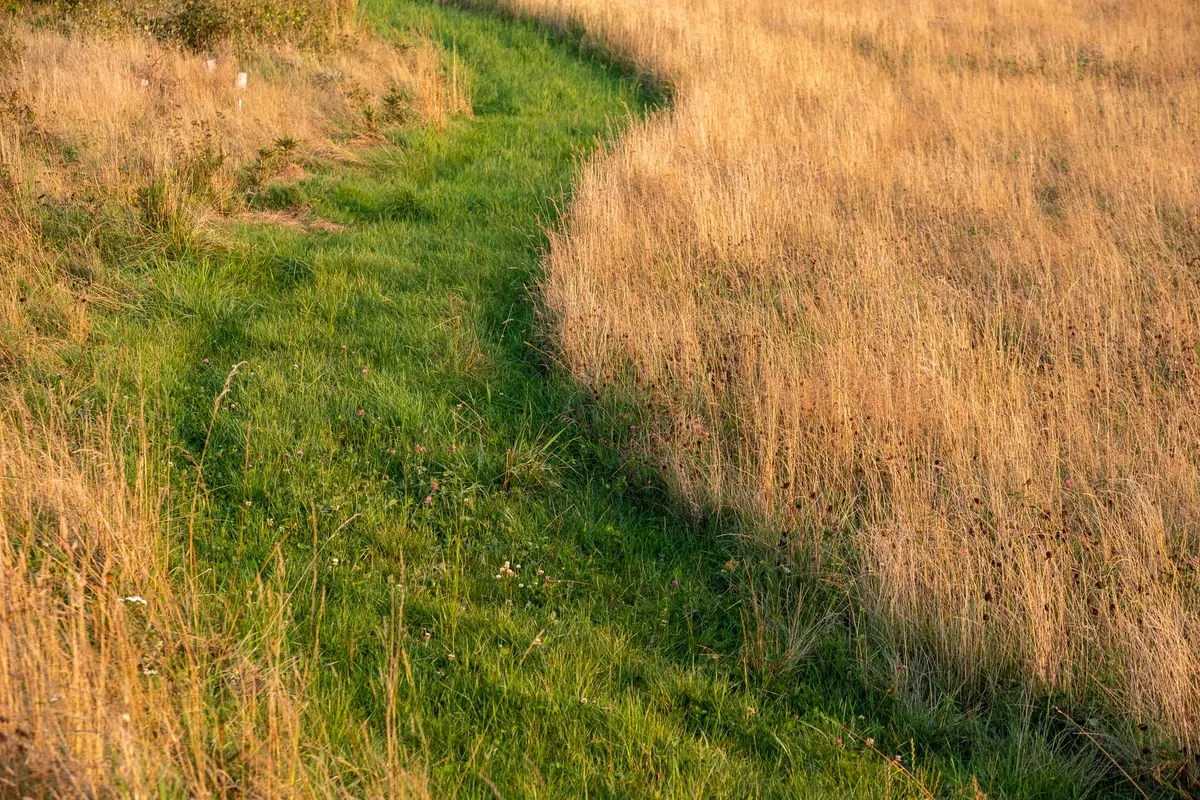
This is also a good moment to mark paths, edges, and any areas you want shorter. A meadow with a mown path looks intentional, even when the rest is wild. It also gives you somewhere to walk without trampling seedlings.
A quick word on seed mixes
Cheap mixes often contain aggressive grasses or species that do not suit your soil. Look for mixes described as native, local provenance, or suited to clay, chalk, loam, or sandy soil. If you want a meadow for pollinators, check that the mix includes nectar-rich flowers such as ox-eye daisy, knapweed, field scabious, yarrow, and bird’s-foot trefoil. For a small patch, you can also plant plug plants into gaps instead of relying only on seed.
May to June: the messy, hopeful months
By late spring you will probably see more weeds than wildflowers. Annual weeds such as chickweed, groundsel, and fat hen can appear in sheets. Do not panic. Many are temporary, and they are filling space while slower perennials build roots. If they threaten to smother seedlings, pull them by hand or cut them back with shears. Avoid spraying.
If you sowed an annual cornfield mix, this is when it starts to gallop. Poppies, cornflowers, and corn marigold may flower by early summer. Let them bloom, then leave them to set seed if you want them to return. If you cut them too early, you lose the show and the seed.
For perennial meadows, keep mowing paths and edges. If the meadow itself is dominated by grass and weeds, continue cutting at 5–7cm every three to four weeks, but raise the cut if you see flower seedlings. Remove clippings every time. This is not a lawn regime forever; it is a first-year boot camp.
July to August: heat, seed heads, and the big cut
Summer is when a young meadow often looks tired. Perennials may be small, annuals may be finishing, and dry weather can turn the patch brown. Brown is not dead. Many meadow plants are resting or setting seed underground.
This is also the time of the main meadow cut in many traditional systems. Once flowers have set seed, cut the whole area to about 5–7cm. Leave the cuttings for a day or two so seed can drop, then rake them up and remove them. Removing cuttings is essential: it takes nutrients out of the system and keeps grass from overwhelming flowers. If you leave them to rot, you are effectively feeding the grass.
“The first year is for roots, not flowers. A patch that looks green and slightly chaotic is often doing exactly what it should.”
If you want to support wildlife, leave a corner uncut over winter. Seed heads feed birds, and hollow stems shelter insects. You can still cut the main area.
September to October: the real sowing season
Autumn is the best time for sowing a perennial meadow. The soil is warm, rain is more reliable, and seeds can settle in before winter. Clear any thick weeds, rake the surface, and sow according to the packet. Yellow rattle is usually sown in autumn too, because it needs a period of cold to germinate well.
If your meadow is already growing, make the last cut of the year now if you have not already. Keep it short going into winter, but do not scalp the soil. If you have bare patches, this is a good moment to scatter extra seed or plant plugs. A little bare ground is useful; seedlings need contact with soil.
November to December: rest, review, and resist tidying
Put the mower away. The main job now is to observe. Which plants survived? Where did water collect? Which areas stayed bare? Make notes, because next year’s decisions depend on what you see. If the meadow looks messy, remember that seed heads and dead stems are habitat, not failure.
You can still plant bare-root wildflower plugs or bulbs in mild spells, but avoid walking on soggy soil. If you must tidy, do it lightly and leave the cuttings in a pile as a habitat feature. Do not add fertilizer, compost, or mulch to a meadow. Low fertility is your friend.
What the first year actually looks like
First-year meadows rarely match the pictures. Here is what is normal:
- Patchy germination: some species appear in one corner only, or not at all until next year.
- More grass than flowers: especially on former lawns or rich soil.
- Annual weeds: a flush of quick-growing plants that will decline as the meadow matures.
- Moss or bare soil: common in wet or compacted spots, and not a disaster.
- A few star flowers: ox-eye daisy, poppies, or cornflowers may steal the show while slower plants bulk up.
Think of year one as site preparation with living plants. Year two is usually more flowery, and year three is when a perennial meadow starts to look established.
Common mistakes to avoid
- Feeding the meadow. Fertilizer helps grass and weeds, not wildflowers.
- Cutting too low. Scalping exposes soil to weeds and can kill young plants.
- Leaving clippings. This adds nutrients and smothers seedlings.
- Sowing into thick grass. Seeds need contact with soil and light.
- Expecting instant results. Many meadow perennials spend year one underground.
- Tidying too much in winter. You remove overwintering habitat and seed heads.
A simple first-year calendar
- January–February: observe, plan, order seed, stop feeding.
- March–April: prepare annual seedbeds, start mowing conversions, mark paths.
- May–June: hand-weed, mow paths, let annuals bloom, keep clippings off.
- July–August: main cut after seed set, remove cuttings, leave a wildlife corner.
- September–October: sow perennial seed and yellow rattle, plant plugs, last cut.
- November–December: rest, review, leave seed heads and stems.
The bottom line
A meadow rewards patience more than perfection.
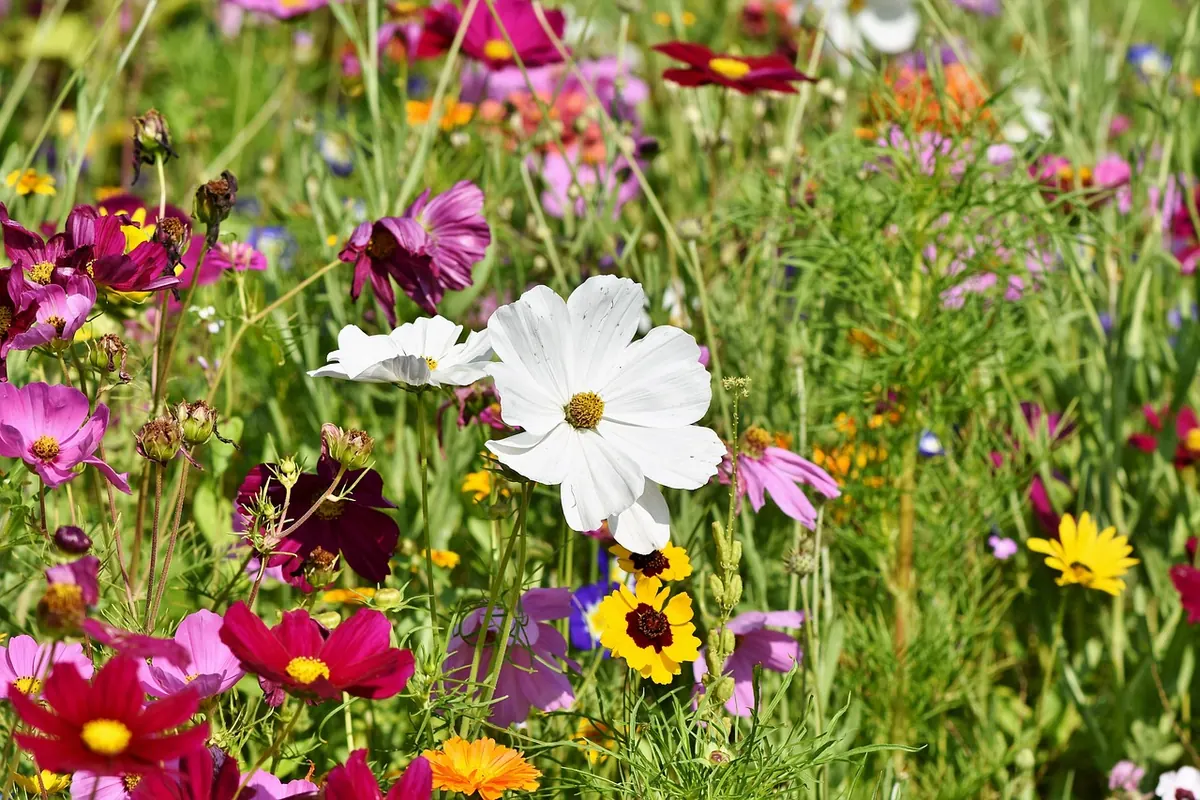
Photo: Ralphs_Fotos / Pixabay
Related Articles