Wildflowers
Annual vs Perennial Wildflower Mixes: Which Is Right for Your Meadow?
Two packets of seed, both labelled "wildflower meadow", and yet they behave nothing alike. One will be in flower ten weeks after sowing and finished by October. The other will look like a scruffy patch of green for a year, then quietly turn into a meadow you can still be enjoying in a decade. Buying the wrong one for your ground is one of the most common reasons people give up on meadow gardening, so it is worth knowing exactly what you are choosing between.
What is actually in the packet
Annual mixes
Most annual wildflower mixes are built around the old cornfield plants: cornflower, corn marigold, corn poppy, scentless mayweed and field chamomile. They are adapted to disturbed, fertile ground, they germinate fast, flower hard and then die, leaving seed behind to try again if the soil is opened up. Some mixes also include non-native garden annuals such as cosmos, calendula and candytuft. These are bright and long-flowering, and generalist bees and hoverflies will use them, but they are not British natives and they bring nothing else to the table.
Perennial mixes
Perennial meadow mixes are usually native species: ox-eye daisy, common knapweed, yarrow, meadow buttercup, ribwort plantain, selfheal, red clover, birds-foot trefoil and cowslip. Many include grasses as well, such as crested dogstail, meadow fescue or timothy. Grasses are not filler — they are half the habitat — but they do compete hard with young wildflowers, which is why "wildflower only" mixes are easier to establish in the first year and grass-rich mixes take longer to balance out.
Colour: an instant hit or a slow burn
Sow an annual mix on bare soil in spring and you can be looking at poppies and cornflowers by midsummer. The flowering window is roughly June to September, after which the whole thing browns off. Leave the seed heads standing for a few weeks, then clear the ground and start again the following spring.
Perennials work to a different clock. Year one is mostly roots and leaves. Year two gives you a scattering of flowers — ox-eye daisies often lead the way. By year three the planting has filled out and the meadow proper begins: a main flush through June and July, then a shorter second flowering in late summer if you cut and take the hay off in July. After that it should come back year after year without resowing.
The long game: cost, cutting and upkeep
Annuals are cheap per packet and expensive per decade. Perennials cost more upfront and then ask for very little, provided you manage them properly.
- Ground preparation. Annuals need bare, disturbed soil every single year — rake, scarify or lightly dig, then sow. Perennials need it once, thoroughly, and hate being sown into existing vigorous grass.
- Cutting. Annuals are usually pulled up or rotavated in at the end of the season. Perennials want a cut in midsummer with the clippings removed, then a second trim in autumn and perhaps a light tidy in early spring.
- Fertility. Annuals cope with richer soil, though too much nitrogen gives you floppy, leafy plants and fewer flowers. Perennials want lean ground; on fertile soil the grasses win and the flowers disappear.
- Weeds. Both struggle against thistle, dock and couch. Perennials need a couple of seasons of hand-weeding to get through the vulnerable stage.
- Yellow rattle. On perennial meadows, sowing yellow rattle in autumn is the standard trick for weakening grass and letting flowers through. It needs winter cold to germinate, so it is no use as a spring quick fix.
Wildlife value: two different jobs
An annual strip is a nectar station. For six or eight weeks it is one of the richest sources of pollen and nectar in the garden, and bees, hoverflies and butterflies will find it. What it does not offer is anywhere to live, anything to eat at other times of year, or food for caterpillars.
A perennial meadow does all of that. The mix of flower shapes — flat daisies, deep knapweed heads, tiny trefoil flowers — suits insects with different tongue lengths, and the flowering season stretches from spring cowslips to late knapweed. Grasses feed the caterpillars of meadow browns, gatekeepers and skippers; birds-foot trefoil is the larval food plant for common blue butterflies. Hollow stems, tussocks and seed heads give invertebrates somewhere to overwinter, and the standing seed heads feed finches through the winter. If wildlife is the point, perennials are the better long-term investment — though an annual patch is a great deal better than mown lawn or bare earth.
Which suits your site?
- A small patch, a rented garden, or a single season to make an impression: go annual.
- Your own ground, five years or more, sun most of the day: go perennial, and add yellow rattle if grass is included.
- Fertile, previously cultivated soil: annuals will perform well; perennials will need the fertility worked down first.
- An existing grassy area: do not just scatter seed into it. Strip, smother or heavily scarify first, or you are feeding the grass and the birds.
Why not both?
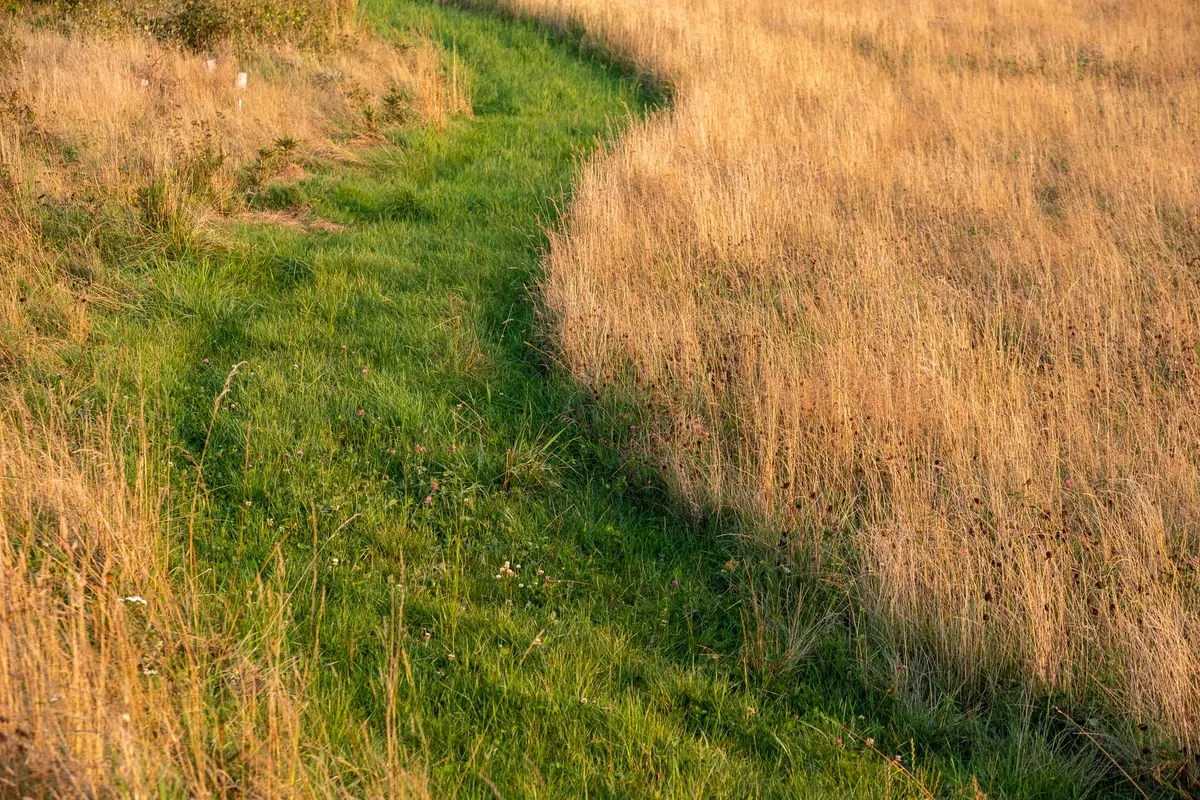
This is what most experienced meadow gardeners end up doing, and it solves the patience problem neatly. Sow your perennial mix in autumn, then give over a strip beside the path, or a border in front of it, to annuals for the first two summers. You get colour while the perennials are finding their feet, and the annuals are in a place where you can clear and resow them each spring without disturbing the main meadow. Alternatively, add a light scattering of cornfield annuals to a new perennial sowing as a nurse crop — but keep the proportion low. Too many annuals will shade out the slow growers underneath.
A simple way to decide
Ask yourself three questions. How long will I be gardening this ground? How much bare, weed-free soil can I prepare? And do I want flowers to look at, or habitat to build? A one-season answer points to annuals. A long-term answer points to perennials. If you are somewhere in between, sow perennials now and treat yourself to an annual strip in the meantime.
Whichever route you take, read the species list on the packet rather than the picture on the front, favour British native species of UK provenance where you can, and match the mix to your soil and light. Get those basics right and the difference between annual and perennial stops being a gamble and becomes a straightforward choice about time.
Photo: Nennieinszweidrei / Pixabay
Related Articles