Meadow Care
The Seasonal Mowing Guide: When and How to Cut Your Meadow
A meadow is not a lawn with longer grass. It is a community of grasses and wildflowers that depends on a rhythm of growth, flowering and rest, and mowing is the tool that keeps that rhythm honest. Get the timing right and the meadow grows richer every year. Get it wrong and you slowly mow the flowers out of it.
Why Timing Matters More Than Frequency
Left alone, most grassland in Britain does not stay meadow for long. Tall grasses flop, a mat of dead material builds at the base, brambles and ash seedlings move in, and within a few years you have scrub. Cut too often and you get the opposite problem: only the toughest, lowest-growing grasses survive, and the oxeye daisies, knapweed and yellow rattle never get the chance to set seed.
The balance most meadow gardeners aim for is one main cut a year, after flowering and seed set, plus a lighter cut later if growth is strong. Everything else is detail.
Spring: Hold Back the Mower
From March until midsummer, the mower stays in the shed. This is when the meadow is working: bulbs and early perennials building leaves, grasses shooting, insects waking. Cutting now removes flower buds before they open and favours exactly the coarse grasses you want to discourage.
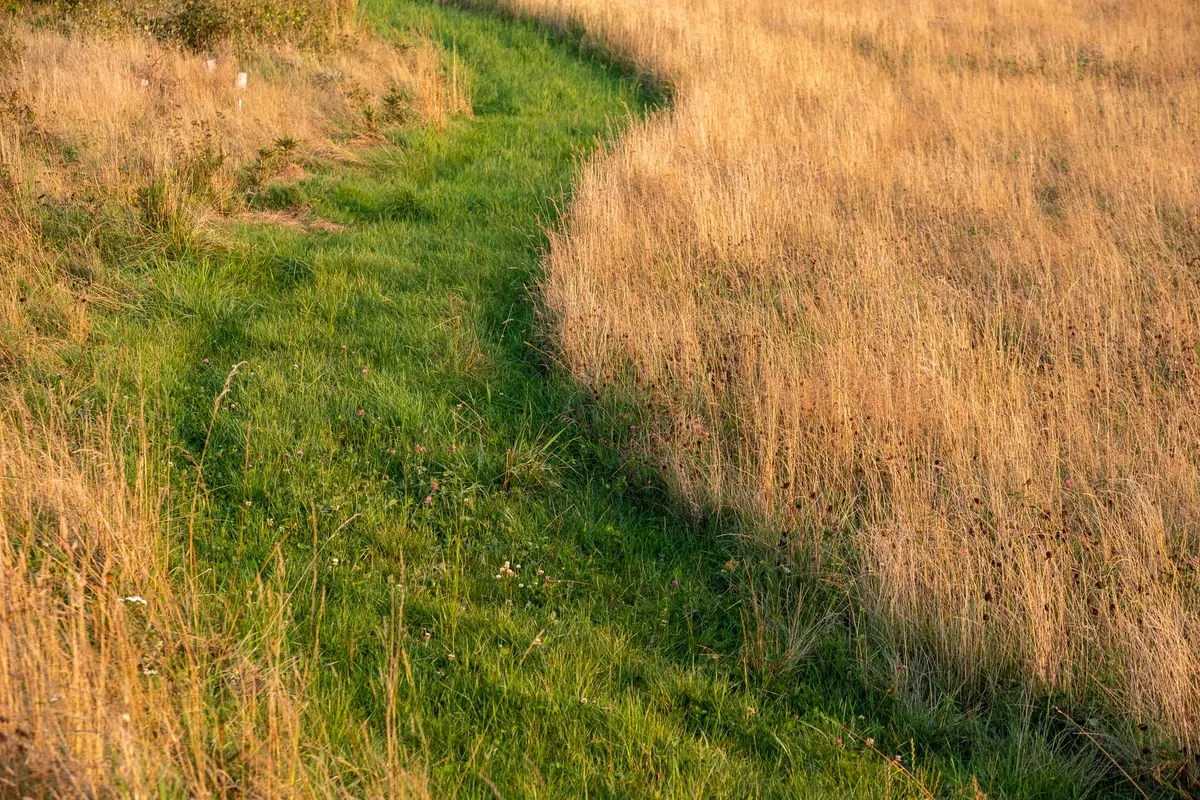
There are two exceptions. Mown paths can be kept short all year if you want to walk through without wading, and a genuinely overgrown, thatchy patch can take a light cut in late March while growth is still slow. Otherwise, leave it. If the ground holds a footprint, stay off it — spring soil compacts easily, and compacted soil grows docks and thistles very happily.
Summer: The Main Cut
When to cut
For a traditional hay meadow in lowland Britain, the main cut usually falls between mid-July and the end of August. The signal is not the date but the plants. Wait until most of your flowers have finished and their seed heads are browning, and the grasses are going over. Cut then, and next year's plants have already banked their seed.
Adjust for your site. A damp meadow with late flowers such as meadowsweet and ragged robin can wait until September; a dry, sandy meadow that flowers early may be ready in July.
How to cut
Set the blade high, around 5–10cm. Scalping to the roots destroys the low rosettes of knapweed, oxeye daisy and plantain, and leaves bare ground for weeds.
Cut in stages rather than marching over the whole plot in one afternoon. Left long, a meadow is a refuge; mown all at once, it is a desert. Strips cut over a week or two, or working from the centre outwards, give insects and small mammals somewhere to go. If you have room, leave a third uncut and rotate which third each year.
Take the cuttings away
This is the step that separates a meadow from rough grass. Grass left lying forms a mat that smothers what is beneath it and returns its nutrients to the soil as it rots. Fertile soil grows coarse grasses and nettles; lean soil grows wildflowers. Rake the cuttings off within a few days and compost them, or use them as a mulch on beds. If you are making hay, let it dry in the sun for a couple of days, turn it once, then collect it.
Autumn: A Second Look
Traditional meadows were grazed after the hay crop, and that aftermath grazing kept the regrowth in check. Without livestock, a second cut in September or early October does the same job, particularly on fertile ground where grass romps away in warm, wet weather. Keep the blade high and clear the clippings again. Leave any late-flowering or seed-heavy patches standing: they feed birds through the winter, and their hollow stems shelter insects.
Winter: Rest and Plan
Once growth stops, put the mower away. Winter cutting does nothing useful and a good deal of harm: working on wet ground pugs the soil, and cutting frozen grass shatters the crowns of tussocks. Keep to paths when the ground is soft, and let the frost break down the thatch.
The quiet months are the best time to plan the year ahead. A simple schedule is worth more than any amount of fiddling:
- March to June: no mowing. Keep paths short and stay off wet ground.
- Late July to early September: the main cut. High blade, in stages, all clippings removed.
- September to October: a second cut only if growth is strong; leave some seed heads standing.
- November to February: rest. Sharpen tools, note what flowered well, decide next year's cut lines.
Mowing That Suits Wildlife
- Sharpen the blade before the main cut. A blunt blade tears grass and leaves ragged tips that yellow.
- Mow on a warm, dry afternoon, when insects are active enough to move out of the way.
- Work from the middle outwards, or in strips, so wildlife can escape ahead of you rather than being trapped in a shrinking island.
- Be careful with strimmers. They cut lower than mowers and will shave a tussock to the ground; keep them for edges and for nettle patches you are trying to weaken.
- Rake up within a few days, before the cuttings mat down.
- Compost clippings away from the meadow, or spread them thinly as mulch elsewhere. Do not spread them back on the meadow unless you want richer, coarser grass.
- For small patches, a scythe is quiet, fuel-free and lets you cut around tussocks and ant hills.
Reading Your Own Meadow
No two meadows behave the same way, and any calendar is a starting point rather than a rule. Your own ground is the best guide. If the grasses flop and the flowers are thinning, you are cutting too late, too often, or leaving the clippings behind. If the meadow never grows tall enough to hide a bumblebee, you are cutting too early. If it fills with nettles, docks and rye grass, the soil is too rich: keep removing the cuttings, and consider a second cut for a season or two to draw fertility down.
Start with one late-summer cut, done high and cleared properly. Once that rhythm works, refine it — leave a patch long, shift the date a fortnight, try a second cut on the strongest ground. A meadow rewards patience more than effort.
Photo: analogicus / Pixabay
Related Articles